If you are comparing the best gorilla lodges in Bwindi and Rwanda, the real decision is not just where you sleep. It is which lodge gives you the best trekking day based on your permit, your sector, your route in and the kind of trip you actually want.
A well-placed lodge can save you an unnecessary pre-dawn transfer and put you close to the right briefing point. It also sits inside a wider budget decision, because a standard foreign non-resident gorilla permit currently costs US$800 in Uganda and US$1,500 in Rwanda. Our advice is simple: choose your gorilla lodge after your permit and trekking-sector strategy is clear, not before.
This guide helps you choose between Bwindi and Rwanda on that basis. If you want to compare itineraries first, browse our Uganda gorilla trekking safaris and tours. If you are still weighing the wider destination choice, start with our full comparison of gorilla trekking in Uganda and Rwanda.
Bwindi and Rwanda at a Glance
Permit figures are current standard foreign non-resident rates. Government tariffs can change, so we confirm the current rate when quoting. Drive times are estimates, confirmed at booking.
| Question | Bwindi (Uganda) | Volcanoes National Park (Rwanda) |
|---|---|---|
| Standard foreign non-resident permit | US$800 | US$1,500 |
| Drive from the international gateway | From Entebbe, most of a day by road. From Kigali to southern Bwindi, roughly 4–5 hours including the border | From Kigali, roughly 2.5–3 hours |
| Trekking terrain | Dense montane rainforest; steep, with muddy sections after rain | Bamboo and montane forest on volcanic slopes |
| Trekking sectors | Four: Buhoma, Ruhija, Rushaga and Nkuringo | One park area, with briefings at Kinigi |
| Lodge range | Boutique, mid-range and budget options across the sectors | Strong high-end range; fewer budget options |
| Gorilla Habituation Experience | Available (currently in the Nyabaremura section of Rushaga) | Not offered |
| Golden monkeys | Not in Bwindi; available in Uganda’s Mgahinga Gorilla National Park | Available in Volcanoes National Park |
Why Your Lodge Location Matters More Than Its Photos
In Bwindi, the briefing normally begins at about 07:30, after registration and permit checks, with trekking generally expected to begin at around 08:00. Weather can affect the actual start time: after heavy rain, for example, the walk into the forest may be delayed until conditions allow.
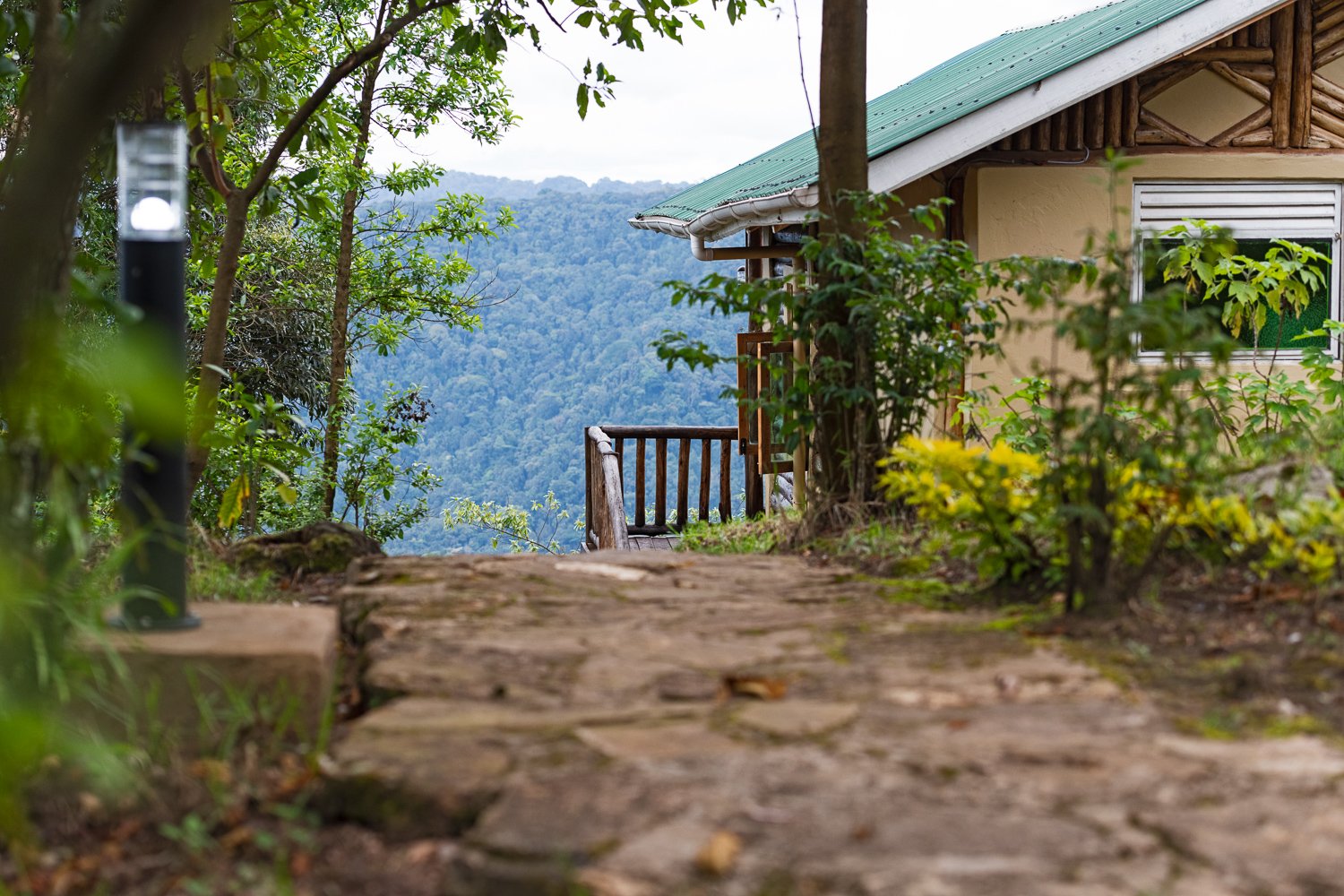
Guests trekking from Nkuringo can walk from Orugano Bwindi Lodge to the briefing point in approximately 10–15 minutes. For guests trekking at Rushaga, our standard departure from Orugano is 06:50, allowing time for the road transfer, registration and briefing.
In Bwindi, choose a lodge in or near the sector that matches your permit. In Rwanda, lodges are spread along the foothills of the volcanoes, typically 15–45 minutes from the Kinigi briefing point. Either way, staying close to the correct trekking start reduces unnecessary early-morning driving and logistical risk.
Which Bwindi Sector Should You Stay In?
Bwindi has four trekking sectors, and this matters more than many travellers expect. The best lodge is usually the one in the same sector as your permit, not the one with the nicest photos online.
| Sector | Best for |
|---|---|
| Buhoma | Northern circuit routes and transfers from the northern safari parks |
| Ruhija | Birding and a quieter setting |
| Rushaga | The widest choice of gorilla families: currently 11 families for standard trekking, plus one family for the Gorilla Habituation Experience in the Nyabaremura section |
| Nkuringo | Kigali arrivals and boutique stays; currently four gorilla families |
Gorilla family numbers and allocations can change over time. We confirm current availability when we arrange your permits.
Should You Stay in the Same Sector as Your Permit?
In most cases, yes. Gorilla permits in Bwindi are sector-specific, and your morning briefing happens in the sector printed on your permit. If you stay far from that sector, you can end up leaving in the dark on hill roads to reach the briefing on time.
Rushaga and Nkuringo are close enough that some travellers stay in one and trek in the other. What we advise against is staying in the north of the park and expecting to trek in the south, which means a long, early cross-park drive. If you are arriving via Rwanda, read our practical route guide from Kigali to Bwindi, because southern Bwindi often makes more sense than crossing the whole park by road.
Why Southern Bwindi Is Easier to Reach Than Many Older Guides Suggest
Road access into southern Bwindi has improved considerably compared with what many older articles still suggest. For guests arriving through Kigali, the drive is practical, and Nkuringo and Rushaga often fit an itinerary more easily than people assume.
Southern Bwindi also gives you options. Rushaga currently has the largest number of gorilla families in Bwindi, and the Gorilla Habituation Experience is currently conducted in the Nyabaremura section of Rushaga.
What Makes a Bwindi Lodge the Right One for You?
There is no single best lodge for every traveller. In Uganda, the right choice must first match the sector stated on your gorilla permit. Each sector has lodges at different levels, from high-end through mid-range to budget, and Ugandan properties of a given classification compare well with equivalently classified lodges elsewhere.
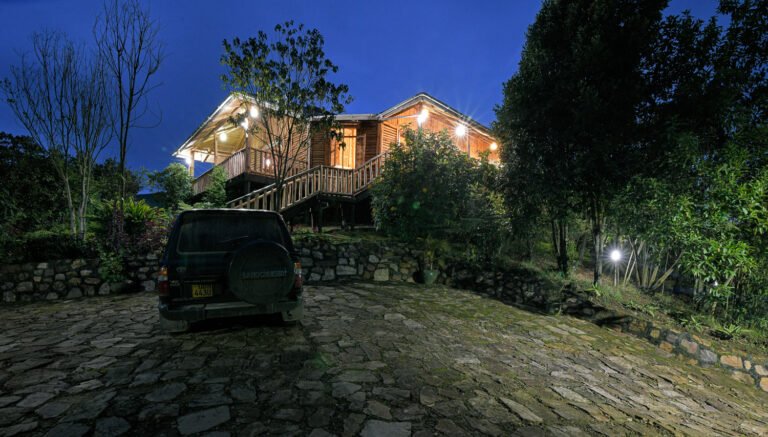
For travellers trekking from Nkuringo, our own Orugano Bwindi Lodge is a boutique lodge worth considering. It is in the Nkuringo area, approximately a 10–15-minute walk from the Nkuringo briefing point. Guests trekking at Rushaga can also stay with us, with a road transfer each trekking morning. Orugano Safaris and Orugano Bwindi Lodge are under common ownership, which means accommodation, permits, transfers and trekking logistics can be coordinated by one team. We recommend the lodge specifically for travellers trekking from Nkuringo; it is not the right base for every Bwindi sector.
For sector-by-sector accommodation detail across Bwindi, see our guide on where to stay in Bwindi.
What Makes Rwanda’s Volcanoes Lodges Different?
Rwanda’s Volcanoes National Park is usually the simpler option logistically. From Kigali, you are looking at a shorter road transfer to Kinigi rather than a long transfer day. That convenience is one reason many travellers accept the higher permit price.
How Do You Choose a High-End Gorilla Lodge in Rwanda?
When choosing a high-end property near Volcanoes National Park, look beyond the architecture and photography. Compare the actual journey time to the Kinigi briefing point: some lodges are about 15 minutes away, others closer to 45. Consider the practicalities: can the lodge arrange an early breakfast before 06:00, and is there a post-trek cleaning service for your boots and gear?
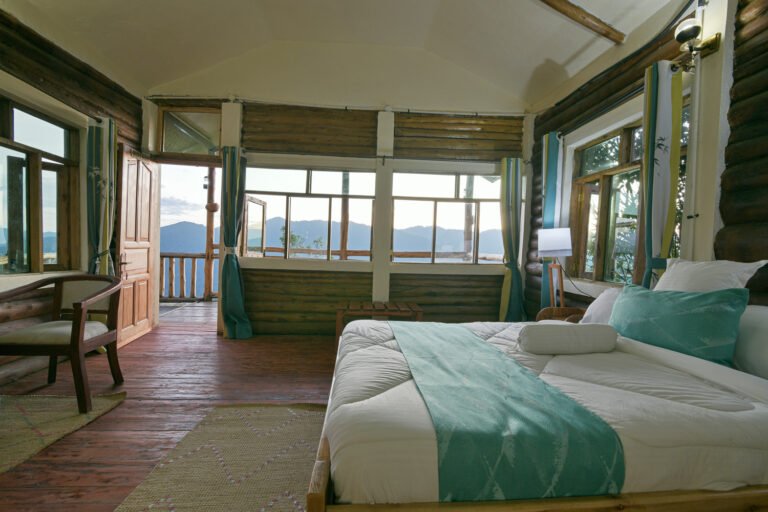
High-end Rwanda lodges are distinguished by their service levels, room privacy and attention to cold-weather comfort. Warm bedding, fireplaces or hot-water bottles make a difference on cold mornings on the volcanoes, so it is worth asking what a property provides. Look for clear conservation commitments and inclusive meal and activity plans. The best high-end lodge is not necessarily the most expensive, but the one that makes your trekking day physically and logistically straightforward.
High-End Options
Rwanda offers several high-end lodges near Volcanoes National Park, with Bisate being one well-known example. These properties combine considered architecture, strong views and a lodge experience built as much around comfort as trekking.
Mid-Range Options
If you want Rwanda without paying top-end lodge rates, you can pair the permit with a solid mid-range stay near Kinigi. That keeps access simple while stopping the total trip cost from climbing too fast.
The Rwanda Setting
The setting feels different from Bwindi. You trek through bamboo and montane forest on volcanic slopes, not dense rainforest. The roads are easier, but the trekking can still be steep depending on your assigned gorilla family. For the full destination comparison beyond lodges, read our guide to gorilla trekking in Uganda and Rwanda.
Is It Better to Spend More on Your Lodge or Your Permit?
This is the decision that usually shapes the whole trip.
Standard foreign non-resident gorilla permits currently cost US$800 per person in Uganda and US$1,500 in Rwanda. Government tariffs can change, so we confirm the current rate when quoting. For two travellers paying these rates, Rwanda permits cost US$1,400 more in total than Uganda permits, before accommodation, transfers or additional nights.
The lower Uganda permit cost leaves more of the same overall trip budget available for accommodation, additional safari nights or other activities. That is why some travellers choose a higher-category Bwindi lodge, or extend their Uganda safari, while remaining within the same overall budget.
The trade-off looks like this:
- Rwanda permit plus a mid-range lodge: shorter road access from Kigali and a simpler itinerary, at a higher permit cost.
- Uganda permit plus a higher-category lodge: a longer approach, with the permit difference available for a better room, extra nights or the Gorilla Habituation Experience.
Neither is right for everyone. If shorter and simpler road access matters most and you are comfortable with the higher permit cost, Rwanda is a good fit. If you would rather put the permit difference towards accommodation or a longer trip, Uganda usually works better. Some guests choose a southern Bwindi permit and then add a short extension such as our 4-Day Bwindi Gorilla and Batwa Safari, or combine both countries on our 6-Day Uganda–Rwanda Gorilla Safari.
To check current permit rules, see the official Uganda Wildlife Authority website and our practical guide to gorilla permit mistakes to avoid.
How Do You Compare Lodge Sustainability?
Both destinations take conservation seriously, although approaches differ between properties. In Bwindi, community-based tourism and local employment play an important role, and many lodges source at least part of their supplies locally. Some of Rwanda’s high-end lodges support habitat restoration, conservation programmes and community partnerships.
The useful question is not which lodge has the better marketing language, but what practical conservation or community outcomes it can demonstrate. A lodge that employs and buys locally means more of your visit supports the communities living beside the forest.
Bwindi Rainforest or Volcanic Slopes?
This may be the most personal part of the decision.
Choose Bwindi if you want:
- To stay beside one of Africa’s oldest rainforests
- Forest sounds in the early morning: birds, insects and rain on the canopy
- A quieter setting away from busier routes
- A lower permit cost, leaving more of your budget for accommodation or extra nights
- Four trekking sectors to choose from
Choose Rwanda if you want:
- Views of the Virunga volcanoes
- A comfort-focused high-end lodge
- Shorter road access from Kigali, approximately 2.5–3 hours (estimate, confirmed at booking)
- The chance to combine gorillas with golden monkey trekking in the same park
Gorilla sightings can never be formally guaranteed because the animals move freely in the forest. In our experience, however, sightings are extremely reliable: we have not known one of our guests to complete a trek without seeing the gorillas in more than two years. Trackers monitor the gorilla families and help locate them each morning.
Questions to Ask Before You Book a Gorilla Lodge
Before you confirm any gorilla lodge, ask:
- Which sector is my permit in?
- How far is the lodge from the briefing point, and what time will we leave on trekking morning?
- Do you provide a packed lunch and enough drinking water?
- Can you arrange porters at the trailhead?
- Is transport to and from the briefing included?
- What are my post-trek logistics if I am transferring the same day?
- What other activities can I do after the trek?
These are not small details. They decide whether your trekking day feels organised or rushed.
How to Decide
The simplest way to think about it:
- Choose Bwindi if you want more sector choice, a wider budget range and the option to put the permit difference into a better lodge or a longer itinerary.
- Choose Rwanda if you want the shortest road access from Kigali and are comfortable paying more for the permit.
- Choose southern Bwindi if you are flying into Kigali and want the Uganda permit rate without the long approach from Entebbe.
- Choose your lodge after your permit and trekking-sector strategy is clear, not before.
If this is your first trek, start by deciding the country and sector, then build the trip around them. For a short introduction, look at our 3-Day Bwindi Gorilla Safari. If you want to combine countries, our 6-Day Uganda–Rwanda Gorilla Safari is a useful option.
Frequently Asked Questions
Which gorilla lodge is best for first-time visitors?
The best lodge is normally one close to the briefing point specified on your permit. In Uganda, that means staying in or near the correct Bwindi sector. In Rwanda, compare the actual transfer time to Kinigi. Your arrival route, budget and preferred comfort level should then decide the final choice.
Should I stay in the same sector as my gorilla permit?
In most cases, yes. Gorilla permits in Bwindi are sector-specific, and your briefing takes place in the sector printed on your permit. Staying in or near that sector avoids long pre-dawn drives and gets you to the morning briefing, which normally begins at about 07:30, without rushing. Rushaga and Nkuringo are close enough that some travellers stay in one and trek in the other.
Which Bwindi sector should I choose for gorilla trekking?
It depends on your route and interests. Buhoma suits travellers combining Uganda’s northern safari parks, and Ruhija suits birders who want a quieter setting. Rushaga currently has the largest number of gorilla families and is where the Gorilla Habituation Experience takes place. Nkuringo, which currently has four gorilla families, suits Kigali arrivals and boutique stays. Your permit date and sector availability usually narrow the choice first.
Is Bwindi or Rwanda better for high-end lodges?
Rwanda has a strong high-end range with internationally known properties near Volcanoes National Park, while Bwindi offers high-end and boutique lodges across four sectors at a lower permit cost. The better question is which sector and route fit your trip; then compare lodges within it.
How many nights should I stay?
We recommend at least two nights: arrive the day before trekking, complete the trek the following morning and leave after a second night without rushing. Choose three nights if you want a rest day or an additional local activity.
Can I visit Bwindi from Kigali?
Yes. Southern Bwindi is approximately 4–5 hours from Kigali, depending on the border crossing, road conditions and your final lodge; we confirm the timing at booking. It is a practical route for travellers who want the Uganda permit rate with the convenience of flying into Kigali. For route planning, read our comparison of Kigali versus Entebbe for gorilla trekking.
Ready to Plan Your Gorilla Safari?
The best gorilla lodge is not necessarily the most expensive. It is the one that best matches your permit, trekking sector, travel style and budget.
If you already have dates, send them to us and we will check current permit availability, advise which sectors have space and suggest lodge options that fit your route. If you have not fixed your flights yet, tell us your arrival airport and we will advise whether Rwanda, northern Bwindi or southern Bwindi is the better plan. Plan your safari with us.