Which Uganda safari length is right for you? If you are asking how many days do you need for a Uganda safari, the honest answer is that 7, 10, 12 and 14 days can all work, but they do not create the same trip.
The real difference is not simply how many attractions fit on a list. It is how much of Uganda you can cover without turning too many days into long transfers.
Most Uganda safaris begin around Entebbe or Kampala. From there, Murchison Falls sits to the north-west, Kibale Forest and Queen Elizabeth National Park form the main western circuit, and Bwindi, Mgahinga and Lake Mutanda sit in the south-west. These regions are close enough to connect on a map but far enough apart for road time to shape your safari.
Contents
- What can you realistically do in 7 days?
- What does a 10-day Uganda safari add?
- What do the extra two days improve on a 12-day safari?
- Who benefits most from 14 days in Uganda?
- Should you choose a road safari or fly-in safari?
- How should you choose the right Uganda safari length?
- Frequently asked questions
Which Uganda safari length is right at a glance?
| Safari length | Best suited for | Realistic highlights | Pace | Main compromise |
|---|---|---|---|---|
| 7 days | Travellers with limited time who want a focused south-west route | Lake Mburo, Bwindi gorillas and Queen Elizabeth wildlife | Full but workable | Little room for delays or extra parks |
| 10 days | First-time visitors wanting gorillas, chimps and savannah | Kibale, Queen Elizabeth and Bwindi | Balanced | Murchison Falls usually needs to wait |
| 12 days | Travellers wanting variety and more breathing room | Murchison, Kibale, Queen Elizabeth, Bwindi and a lake stay | More comfortable | Higher cost and more time away |
| 14 days | Photographers, birders, families and slow-travel visitors | A broader north-to-south circuit with longer stays | Relaxed and flexible | Requires a larger budget and holiday window |
Our practical view: seven days works when your priorities are clear; 10 days is a strong starting point for a balanced first safari; 12 days improves variety and breathing room; 14 days suits travellers who want the journey itself to matter as much as headline activities. None of these durations is automatically right for every traveller.

Uganda kob in Queen Elizabeth National Park — a savannah stop adds useful contrast to forest trekking.
Why does safari length matter more in Uganda than a map suggests?
Uganda gives you several different environments in one country: open savannah, crater lakes, tropical forest, highland terrain and volcanic landscapes. The problem is that these environments are not arranged in one compact circuit.
For most first-time visitors, we find that 10–12 days provides the best balance between Uganda’s major experiences and the time required to travel between them.
A route from Entebbe through Kibale, Queen Elizabeth and Bwindi is logical. Adding Murchison Falls changes the shape of the trip because you are travelling in the opposite direction first. Road conditions, weather, traffic, stops and the exact location of your lodge all affect the day.
Bwindi also requires sector-specific planning. Buhoma, Ruhija, Rushaga and Nkuringo are not interchangeable overnight locations. Your permit sector affects where you sleep and how long you travel to the briefing point.
Plan by usable safari days, not just the number of nights on a quotation. A day spent travelling can still be scenic and worthwhile, but it is not the same as a full day in a national park or a free afternoon after trekking.
What can you realistically do in 7 days?
A focused seven-day Uganda safari works best in the south-west:
Entebbe → Lake Mburo → Bwindi → Queen Elizabeth National Park → Entebbe
This route gives you one major primate experience, usually gorilla trekking, plus contrasting savannah wildlife. Lake Mburo breaks up the first transfer, Bwindi provides the forest section, and Queen Elizabeth adds game drives and the Kazinga Channel area.
The gains are clear:
- You complete a proper one-week Uganda safari.
- You combine gorillas with wildlife rather than visiting Bwindi alone.
- You avoid the excessive backtracking involved in adding Murchison Falls.
- You can include Ishasha or the main Queen Elizabeth sectors, depending on your permit and lodge location.
The compromises are just as important. There is little room for delays, weather disruption or a slow morning after trekking. Adding Kibale for chimpanzee tracking means dropping something else or accepting a faster pace. Murchison Falls is too ambitious for most seven-day road itineraries from Entebbe.
If chimpanzees matter as much as gorillas, move to 10 days. If you dislike long road transfers, consider a scheduled or charter flight to protect your time, subject to routing, schedule and availability.
See the confirmed 7-Day Uganda Safari for an example of this focused route.
What does a 10-day Uganda safari add?
Ten days is a strong starting point for a first Uganda safari because it can connect Kibale, Queen Elizabeth and Bwindi without forcing every day to carry two activities.
A practical sequence is:
Entebbe → Kibale → Queen Elizabeth/Ishasha → Bwindi
This route gives you the best chance to include:
- Chimpanzee tracking in Kibale
- Gorilla trekking in Bwindi
- More than one wildlife activity in Queen Elizabeth
- A boat cruise or additional game drive, depending on the final route
- Better separation between forest trekking and long road transfers
Ten days does not mean every Ugandan park fits automatically. If you also want Murchison Falls, Ziwa Rhino Sanctuary, a slower Lake Mutanda stay or several cultural activities, you may need 12 or 14 days.
If 10 days fits your schedule, we can tailor a western Uganda route around your priorities. For comparison, our 8-Day Best of Uganda Safari and 11-Day Uganda Gorilla & Primate Safari show how the itinerary changes as additional days become available, and you can review the full Uganda Safaris hub for more route ideas.

The highland landscape of south-west Uganda around Lake Mutanda — a 10-day route lets you connect Kibale, Queen Elizabeth and Bwindi without turning every day into a transfer.
What do the extra two days improve on a 12-day safari?
The main benefit of 12 days is not simply adding more places. It is reducing the number of one-night stays and giving demanding activities the space they require.
At 12 days, a broader circuit becomes possible. Murchison Falls and Ziwa can be combined with Kibale, Queen Elizabeth and Bwindi, although travellers who want longer stays in each area may still be better served by 14 days. You can also:
- Add a second night where the landscape or wildlife deserves it
- Avoid placing a long transfer immediately after a strenuous trek
- Include a community, birding or lake activity
- Keep a little flexibility when weather or road conditions change
- Finish more calmly instead of rushing directly to your departure
Our confirmed 12-Day Ultimate Uganda Wildlife, Primate & Nature Safari is the closest published example of this fuller Uganda circuit.
Orugano Safaris operates Orugano Bwindi Lodge in Nkuringo, near the southern Bwindi briefing point. For transparency, we still recommend accommodation according to your gorilla permit sector, route and comfort requirements, not simply because we operate a lodge there.
Who benefits most from 14 days in Uganda?
Fourteen days suits you if you want time to observe rather than move constantly. Photographers benefit from additional early-morning and late-afternoon wildlife opportunities. Birders need time for specialised habitats. Families and older travellers often prefer two- or three-night stays instead of changing lodge every day.
A 14-day plan can realistically add:
- Murchison Falls and Ziwa to a south-west circuit
- Additional nights in Kibale, Queen Elizabeth or Bwindi
- More time around Lake Bunyonyi or Lake Mutanda
- Community activities and slower scenic stops
- Flexibility for a second primate trek or special-interest activity
For a two-week safari, we can extend the core Uganda circuit according to your priorities, adding Murchison Falls, slower stays or specialist activities where appropriate. Start with the Uganda Safaris hub and use the 12-day flagship route as your planning base.
If you have two weeks and want to cross borders, you can also consider wider East Africa safari options, including combinations across Uganda, Rwanda, Kenya and Tanzania.
Should you choose a road safari or fly-in safari?
A road safari gives you the connected journey: changing landscapes, village roads, crater lakes and the gradual shift from savannah to forest. It works particularly well for a western Uganda circuit and gives your guide more flexibility with stops.
Flights make more sense when your schedule is tight or Bwindi is the main purpose of your visit. Scheduled and charter services can reduce long transfers, but they do not remove all road travel. You still need ground transport between the airstrip, your lodge and the correct trekking sector.
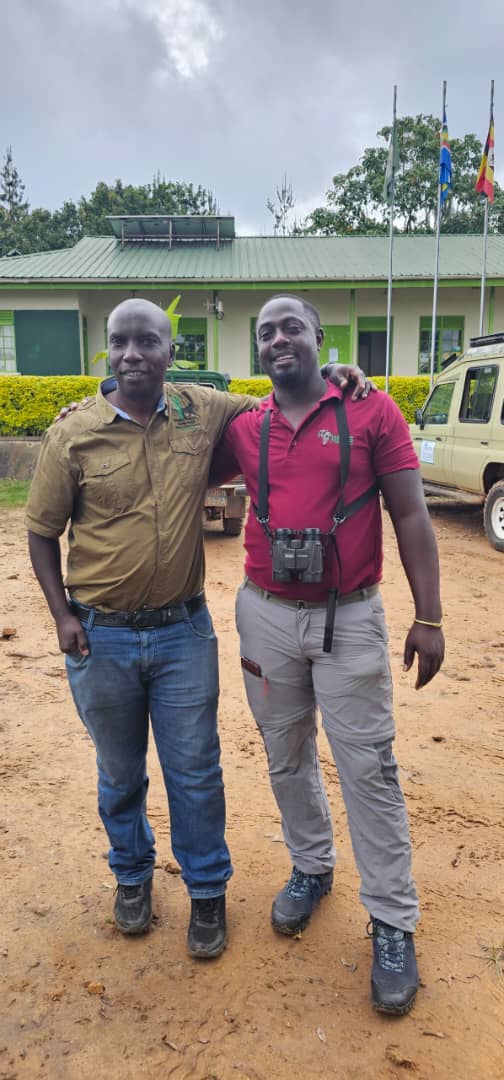
The Orugano team and safari vehicles. Your guide, vehicle and route sequence matter as much as the number of days.
How should you choose the right Uganda safari length?
Use this five-point checklist:
- List your non-negotiable experiences first. Decide whether gorillas, chimpanzees, savannah wildlife, Murchison Falls, scenery or culture comes first.
- Be honest about long drives. Uganda is rewarding by road, but a transfer day can involve several hours on mixed road surfaces.
- Consider what comes after your trekking day. Gorilla trekking can be strenuous, particularly in wet or steep terrain. Where the itinerary allows, avoid following it with one of the trip’s longest transfers, especially for travellers who prefer a slower pace.
- Match the route to your arrival airport. Entebbe works well for a full Uganda circuit. Kigali can shorten access to southern Bwindi, particularly the Nkuringo and Rushaga sectors. Journey time varies considerably with the border crossing, road conditions and final lodge or trekking sector — compare the routes in our Kigali vs Entebbe gorilla trekking guide.
- Match the lodge to the permit sector. Buhoma, Ruhija, Rushaga and Nkuringo affect your accommodation and road plan. Confirm the permit and lodge location before booking non-refundable flights.
Frequently asked questions
Is 7 days enough for a Uganda safari?
Yes, if you focus on the south-west and accept a full schedule. A route including Lake Mburo, Bwindi and Queen Elizabeth can combine gorillas and wildlife. Seven days is not enough to cover every major region comfortably.
Is 10 days enough for gorillas, chimpanzees and wildlife?
Yes. Ten days is a comfortable starting point for gorillas, chimpanzees and savannah wildlife in Kibale, Queen Elizabeth and Bwindi. If you also want Murchison Falls or several slow lake and community days, choose 12 or 14 days.
Can I do a 7-day Uganda safari and still see chimpanzees?
Only by dropping something else, accepting a faster pace or flying. You may be able to build a specialised route, but fitting chimpanzees, gorillas and wildlife into seven road-based days leaves little margin. Ten days is the more comfortable starting point for gorillas and chimpanzees.
Should I choose 12 or 14 days?
Choose 12 days if you want a broad Uganda circuit with the main highlights and a practical pace. Choose 14 days if you want longer stays, photography, birding, family-friendly pacing or more flexibility around weather and special interests.
How long should I spend in Uganda altogether?
For a first visit, 10–12 days usually gives you the best balance between variety, travel time and cost. Choose seven days for a focused south-west trip. Choose 14 days if you want Uganda’s north and south, more rest and time for activities beyond the headline treks.
Not Sure Which Uganda Safari Length Fits Your Trip?
Send us your travel dates, arrival airport, main interests and preferred pace. We will check permit availability, recommend a route that uses your days well and confirm permits and accommodation before you commit. Custom safari enquiries receive a response within 24 hours.